
Here on Bonaire, I regularly see divers who feel unwell during or after a dive. Dehydration often plays a role, especially among tourists. That’s not surprising at all. In this blog, you’ll read why divers lose fluids so quickly, what the consequences can be, and how to easily prevent it.
From 10°C to 30°C
Imagine this: you’re coming from somewhere cold, where it’s 10°C (50°F). You’ve been flying for hours and you arrive late in the evening. The dry cabin air on the plane has already cost you some fluids along the way.
The next morning, you wake up still a bit tired from the trip and head straight out for your first dives. On Bonaire, it’s 30°C (86°F). Your body isn’t used to the heat yet, so you sweat a lot. Then you put on your wetsuit and carry your gear to the shore in the sun. That effort and the heat make you lose even more fluids, all before you’ve even entered the water.
You lose fluids underwater too
You also lose fluids during the dive itself, in three ways:
- Dry air. The compressed air in your tank is very dry. Your body moistens every breath you take, and you breathe that moisture back out.
- Needing to pee more often. Water pressure pushes blood from your arms and legs toward your chest. Your body then thinks there’s too much fluid and starts producing more urine. That’s why many divers urgently need to pee during and after a dive.
- Sweating. In warm water and in a wetsuit, you simply keep sweating underwater too.
All of these factors together can quickly leave you dehydrated.
What does dehydration do to you?
Dehydration can give you a headache after a dive, or make you feel faint or very tired. That’s unpleasant and can really get in the way of your dive vacation.
But there’s more: dehydration is also one of the risk factors for decompression sickness. That’s true even if you stay well within the limits of your dive computer.
How to prevent dehydration
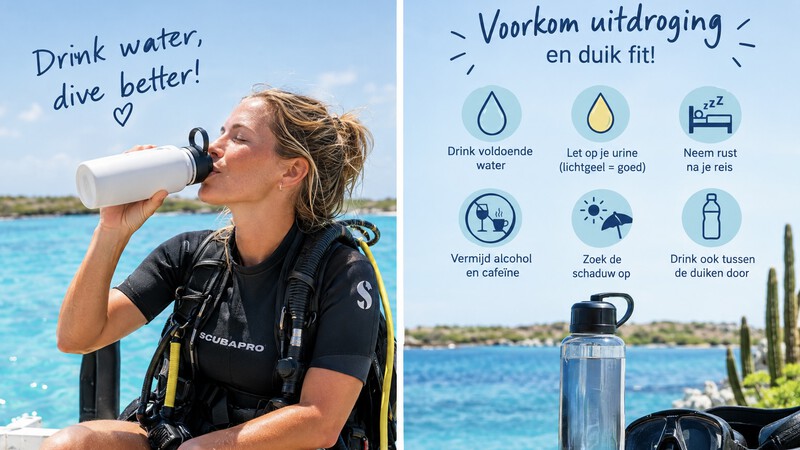
Fortunately, dehydration is easy to prevent. With these tips, you’ll enter the water feeling fit:
- Check your urine. If it’s light yellow, you’re doing fine. If it’s dark, it’s time to drink more.
- Rest after your trip. Just arrived and tired from the flight? Then give yourself a relaxed first day before you start diving.
- Drink plenty of water. Start before your first dive and keep drinking throughout the day, even if you’re not thirsty.
- Drink between dives too. Bring a bottle of water in the car or on the boat.
- Avoid dehydrating drinks. Alcohol and caffeine (such as coffee, energy drinks and cola) make you lose more fluids. So save that beer for after your last dive of the day.
- Look for shade. Put on your wetsuit at the last moment and don’t wait around in the full sun longer than necessary.
Still having symptoms after diving?
Do you develop symptoms during or after a dive, such as tingling, loss of strength, dizziness, joint pain or shortness of breath? Then go straight to the Emergency Department of Fundashon Mariadal, even if you think it’s “just” dehydration. For serious symptoms, call the emergency number 911.
You can find more information on the FAQ page.
In short: rest after your trip, drink plenty of water, and avoid alcohol and caffeine as much as possible on dive days. That way, you’ll get the most out of your dives on Bonaire!